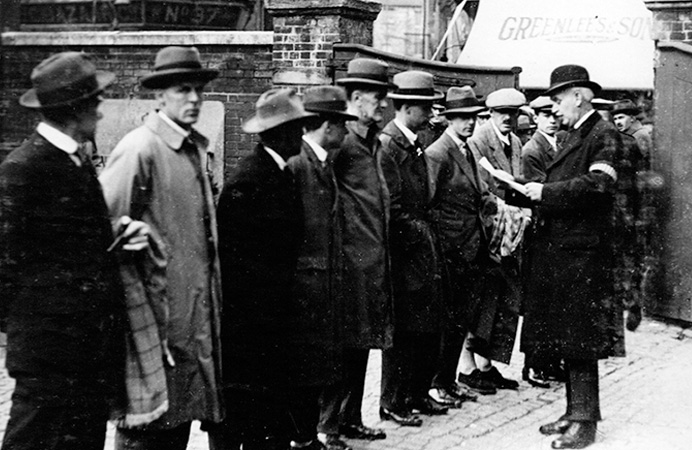
No buses or trains. No newspapers, and a struggle to open schools. Everything threatening to come to a standstill. The only general strike in British history had begun. Borough archivist Dr Jonathan Oates looks back.
Almost exactly 100 years ago today, on 4 May 1926, all workers in trade unions across the borough, and across the nation, withdrew their labour.
The origins lay in a dispute in the coal industry when workers went on strike against wage cuts.
When the Trades Union Congress (TUC) failed to force the government to take action against the coal industry, it called on all trades unions to ask their members to go on strike.
These included print workers and, perhaps, most importantly, transport workers – the men and women who drove the trains, trams and buses which took people to work and school in an era when few had motor cars.
This had a big impact locally. In Acton, transport was the largest single employer of male workers at this time. There was a tram depot in Acton and another in Hanwell. There were numerous railway stations for the Great Western Railway and the London Underground lines throughout the district. Thousands of local people went in strike.
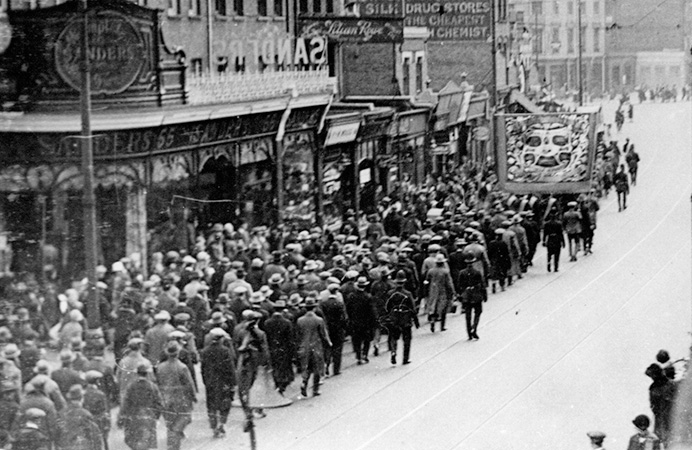
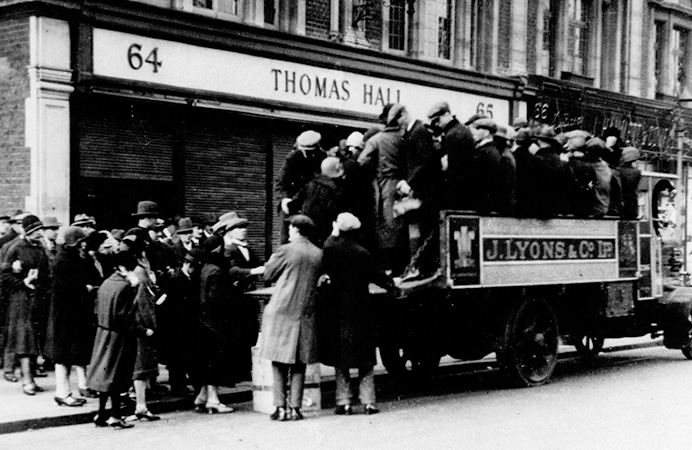
This could have paralysed the nation and forced the government to comply. Certainly, when people tried to get to work in London on Tuesday 4 May they found railway stations closed, buses and trams not running. But some motorists tried to help and gave people lifts to work in London and some companies arranged for private transport for their employees. Some others walked to work or cycled.
And, in the next few days, some people even volunteered to drive trains, trams and buses and to work on other transport roles. Some locals, such as the father of famous ballerina Margot Fonteyn, jumped at the chance. He had an unfulfilled ambition to be a train driver and saw his chance to fulfil it. Others saw it as a patriotic duty or as an adventure. And, over the next few days, people with a minimum amount of training started to drive public transport and got the networks back to some kind of service.
Hostility and rallies
There was some hostility from some of the strikers against the volunteer-run trams and buses. This was sometimes verbal but sometimes stones were thrown.
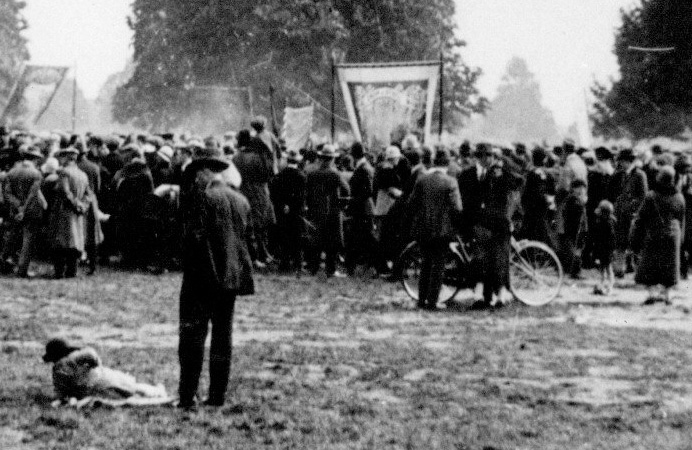
Meanwhile, the strikers from Ealing and Acton had regular mass meetings on Ealing Common. They were addressed by councillors and trade union officials. On one occasion, a Welsh miner was passing by and decided to join in and gave a speech based on personal experience about working conditions and the need for solidarity in face of wage cuts. It was noticed that some of the strikers wore the medals they had earned during military service in the First World War.
Although physical confrontations were rare between those striking and those breaking the strike by driving trains, buses and trams, the police enrolled some men as special volunteer constables to keep the peace. One was Christmas Humphreys, son of Ealing judge Sir Travers Humphreys. And they were very occasionally involved in scuffles with strikers.
Coming to an end
After 8 days, the strike was called off on 12 May because the TUC could see that the country had continued running despite a withdrawal of labour in key industries.
Most of those on strike returned to work, but a handful of men who were union officials did not.
The local press, which had been massively reduced during the strike, went back to full size and the editorials congratulated everyone for not having gone to extremes and for behaving calmly and peacefully.
There was sympathy for the miners (whose cause eventually collapsed) but not for the action of the TUC in calling a general strike.
Listen to a talk about the strike
Dr Oates will be giving a talk about the general strike and its impact locally on Tuesday 12 May at Ealing Central Library (5:30-6:30pm). It is free to attend but there are limited spaces, so you need to book online.
And another talk next month…
Another local history talk is due to be given at The Dominion Centre in Southall on 18 June (5:30pm). It is titled: The Turban Controversy in Southall in the 1960s and 1970s. Turban wearing was a relative novelty in England in the 1960s and 1970s, despite it being a key part of Sikh identity. This led locally to issues arising both in workplaces and for motorcyclists and also in gurdwaras. It resulted in changes in the law and raised questions of both equality under the law and multiculturalism.