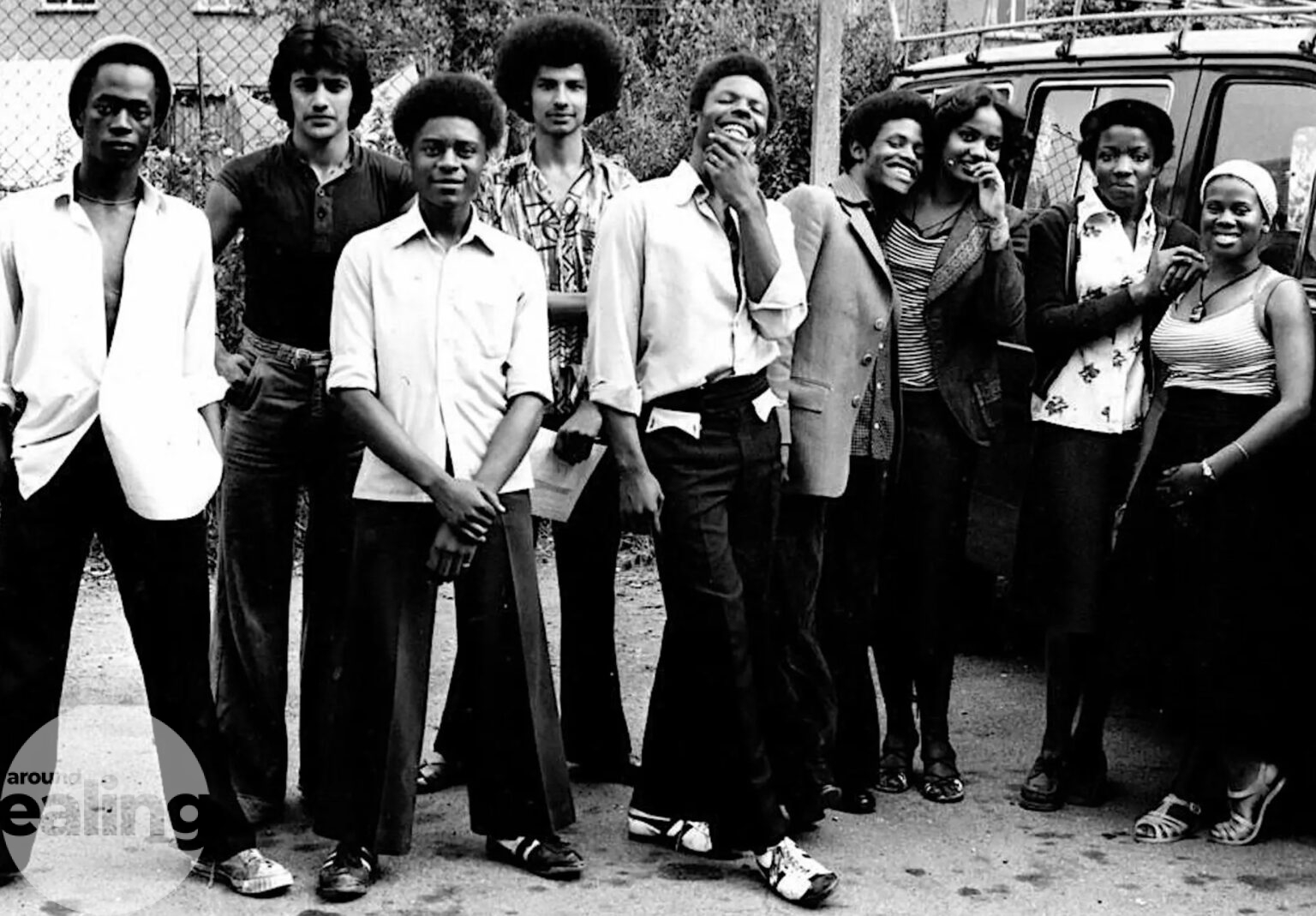
Music, food, faith and so much more. A talk this weekend will give you an insight into the lives, joy and celebration of Southall’s Caribbean community.
As Black History Month continues, Elisia Sebastian Swaby will be giving a talk at Southall Dominion Centre this Saturday (17 October) at 6pm. It is free to attend but you need to register first.
The talk, Tracing Southall’s Vibrant Caribbean Community Over the Mid-to-Late 20th Century, will explore both written documentation and images.
There were people of Caribbean backgrounds in Southall in the early part of the 20th Century. Jazz artist Cleo Laine described her father as ‘the only black in Southall’ when she grew up in the neighbourhood in the late 1920s and early 1930s. And newspaper accounts include the 1929 appearance of pianist Bruce Wendell at a show given for the Southall Brotherhood. He was described as a ‘coloured West Indian’ with a recent successful performance near Oxford Street.
However, the arrival of the Windrush generation in the 1950s and 1960s was when the town’s original Caribbean community largely settled. And the national census records of the 1960s detailed the specific island nations that Southall’s West Indians hailed from.
There were initially more adults than children in the Caribbean community, with children being left behind in their homelands originally. But this changed over time and the number of Caribbean pupils in local schools increased.
Faith plays a big part in West Indian life – and Southall was no exception. Caribbean families would be frequent attendees of many local churches, including St Anselm’s Catholic Church. And songs such as ‘Jamaica Farewell’, sung famously by Harry Belafonte, were sung at St Anselm’s to fundraise for a new parish hall and social centre in 1974. There was also a West Indian Church of God that was active during the 1970s.
Indeed, music also formed a key role.
The now-legendary reggae band Misty in Roots formed in the mid-1970s – a Southall band who lay at the intersection of music, advocacy, and resistance to the racism experienced by the people of Southall at the time. A significant movement was ‘Rock Against Racism’. The band’s messages about freedom, peace, education and consciousness resonated with audiences of all kinds of music genres, and they became very influential.
The group members went to Featherstone High School and formed when playing music at a local youth club. They later ran several local projects such as community workshops and courses.
Band member Themba said in 1996: “The African Caribbean community, particularly in Southall, has always been very strong and that is why we have stuck together.”
Caribbean music events would be held at various venues across Southall. For example, in March 1980 a ‘Caribbean Evening’ at Southall Community Centre, Bridge Road was advertised in the Hammersmith & Shepherds Bush Gazette. The night would involve steel pan and disco.
Other cultural activities became a staple of everyday life – from sports days and dances to art exhibitions and carnivals. Miss Dominica UK – Florence Henderson – attended the Golf Links estate carnival celebration in 1984.
One example was a series of cultural events called Caribbean Focus ‘86. This was commissioned by the Commonwealth Institute. Paintings and exhibitions were displayed at the Broadway Centre. And bands including Misty in Roots, Cool Notes, Masquerade and Winston Reedy, performed a 10-hour music festival at Southall Football Ground.
Southall Library would hold displays of Caribbean culture too. This would be in the form of images and literature on the region. And, in 1998, to celebrate 50 years since the Empire Windrush brought Caribbean people to Britain, residents met at the towpath of the Hamborough Tavern, to board narrowboats on the Grand Union Canal. Here, they would listen to traditional, Caribbean tales and enjoy food, drink and music.
Cricket played a big role in bringing together Southall’s Caribbean community, with the Caribbean & Commonwealth Cricket Team based in the town.
And, of course, school life was part of the cultural fabric, too. The Beaconsfield School organised harvest festivals where West Indian banana bread was one of the delicacies on offer.
Although integration was already being seen at local schools in the 1970s, West Indian children were affected by the controversial dispersal programme in the 1970s. This involved being transported by bus to schools on the outskirts of the borough with a low quota of black and brown children. This policy was the subject of a recent exhibition.
Other national political issues were big topics locally. The Southall-based Afro-Caribbean Association stood in solidarity with the Indian Workers’ Association in response to the 1971 Immigration Act – an act which legislated the deportation of illegal immigrants retroactively.
Local people rallied together to support one another.
The Unity of Afro-Caribbean People was a large community organisation based in Southall formed in 1982. It ran Saturday schools that during the summer, drop-in sessions and a youth centre at the Dominion Centre. There were classes available to upskill members of the Caribbean community. These would take place at the Southall Community Centre at Merrick Road.
To find out more about these stories, and much more, attend the talk on Saturday (17 October) 6-7pm at Southall Dominion Centre. You can sign up free of charge online.