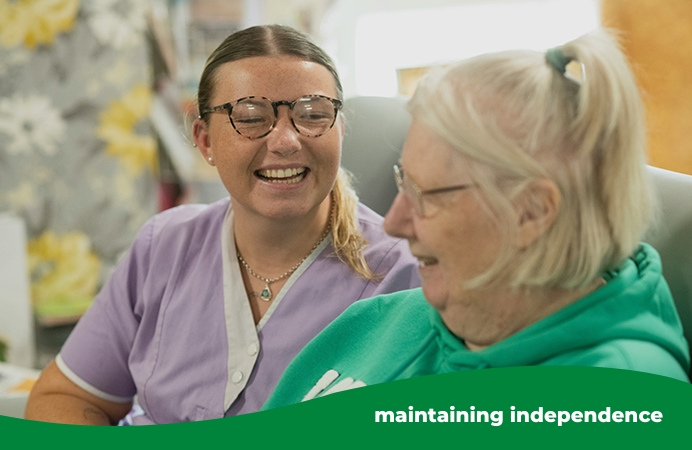

Over the last 3 years, Ealing Council has helped more than 3,000 people each year to continue living independent lives within their own homes.
The council’s Better Lives approach has been easing pressure on the NHS, so the most serious cases can get seen quickly. This has involved focusing on early help, which means acting quickly and giving people the right support so they can stay independent for longer.
Getting back on your feet
One example of how this has worked is the council’s reablement service. This short-term support helps you regain skills and confidence after illness or injury. It can mean learning to cook again, getting dressed without help or moving safely around your home. Reablement reduces the need for long-term care and helps you get back to living life your way.
The council has also invested in home adaptations through the Better Care Fund. This national scheme combines NHS and council budgets to help people live safely at home. A new shower or specialist toilet can mean you do not need to rely on someone else for everyday tasks.
Giving residents more control over their care is a priority for the council. That is why it has been championing ‘direct payments’, which gives carers control and makes it easier for them to choose the support that works for them. Instead of the council arranging services, they receive money to organise support in a way that suits them best. This could include hiring a personal assistant, paying for day care, or supporting your wellbeing with a gym membership or short break.
Designed around your needs
Direct payments are not new, but the council has made them easier to use. It has launched a new booklet, an easy-read guide and a short animation on YouTube. These were jointly designed with carers and service users. Around 11% of adult social care users now receive Direct Payments, and the council wants more people to benefit. Find out more about direct payments.
Services work best when they are shaped by the people who use them. For example, the Ealing Carers Strategy was put together with the help of unpaid carers, the NHS and local voluntary organisations via the Carers Co-Production Board. This approach makes sure carers’ voices influence decisions about hospital discharges, care plans and support services – so the support you get matches real life
‘It has boosted morale’
Fair pay for care workers is another achievement. More than 2,500 care workers in the borough, an incredibly diverse workforce mainly made up of women, are now paid the London Living Wage. The council invested £8million in adult social care to make this possible because it believes care work should be valued.
Eunice Asante, who works for Hartwig Care Ltd and is based at Turnberry Court, said: “When we were being paid less, people complained about transport and the cost of buses. Now it is a lot less. It has boosted our morale at work.”
Amina Cabdullahi, a carer with Direct Support Ltd since 2015, said: “It has helped me a lot. I am able to pay for my 2 sons to receive extra tuition and better opportunities. There is a big difference in how I was managing before and after. I am grateful it has been introduced.”
The borough also has the fastest hospital discharge rates in north west London. This means people return home sooner and hospital beds are freed up. Integrated health and social care teams have made this possible. Having more social workers on hospital wards and speeding up assessments means the longest waits are down by 75%. It means 3 times more residents now get an outcome within 10 days of first contact.
‘Independence, choice and fair pay’
Councillor Polly Knewstub, the council’s cabinet member for healthy equal lives, said: “We want residents to feel confident and supported in making decisions that work for them and their families. By investing in independence, choice and fair pay, we are building a borough where people can thrive into later life – at home, in good health and with dignity.”
Health and wellbeing
The council is continuing to invest in health and wellbeing across the borough. You can explore what this means in the council’s interactive Health of the Borough report.
Photo by Age Cymru on Unsplash