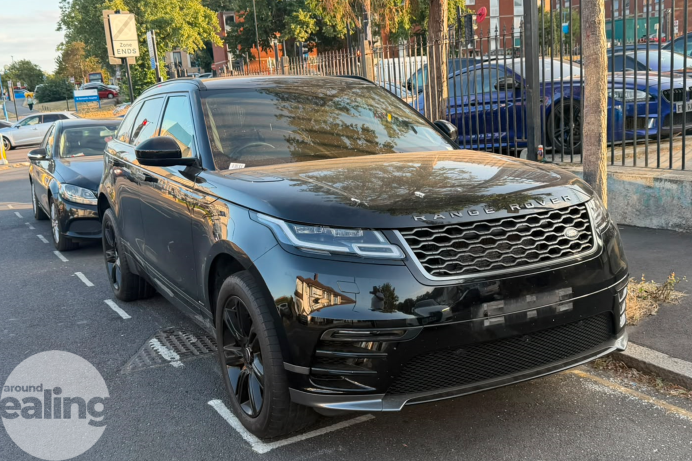
A Range Rover parked without number plates was towed away by Ealing Council enforcement officers, leaving its owner with a bill of more than £500 to get it back.
The vehicle had previously been issued with a penalty charge notice (PCN) for being parked without a permit in a controlled parking zone (CPZ). When enforcement officers later returned, the PCN had been removed, and the vehicle was no longer displaying its registration plates – which is illegal.
Despite having no number plates, the council’s parking enforcement team was able to identify the vehicle and arrange for it to be removed.
To reclaim the Range Rover, the owner had to pay £450 in release fees, plus £110 in outstanding PCNs, bringing the total cost to £560.
Tackling the wider problem
This case is one example of the council’s pilot programme to remove abandoned and unroadworthy vehicles from streets and housing estates across the borough. This includes those that have not got valid tax, MOT and insurance.
As part of this scheme, the council has removed more than 1,700 vehicles in the last year, including nearly 200 from council housing estates. These include abandoned cars, untaxed vehicles and those with large numbers of unpaid parking fines.
Keeping streets and estates clear
Since the pilot began in September 2025, the council has removed significantly more vehicles than in previous years, freeing up spaces for residents that had been taken up by abandoned and unlawfully parked vehicles.
The council is looking to put in place a permanent round-the-clock vehicle removal service, so the work can continue when the pilot scheme ends.
Councillor Dominic Moffitt, the council’s cabinet member for climate action, said: “Abandoned and unroadworthy vehicles take up valuable parking spaces, make neighbourhoods look neglected and can attract anti-social behaviour.
“Ealing Council has taken more than 1,700 abandoned vehicles off our streets which shows the scale of the problem and our determination to tackle it.
“The council has removed more than 1,700 abandoned vehicles from our streets, showing the scale of the problem and our determination to deal with it.
“We will continue working across the borough to identify and remove abandoned and unroadworthy vehicles, helping keep our neighbourhoods cleaner, safer and more pleasant for residents.”
Is it abandoned?
The rules for parking on a housing estate are the same as parking on the public highway. Vehicles must have valid tax, MOT, insurance, and be in good working order, which includes displaying registration plates.
Commercial garages are not allowed to operate on housing estates – and cars that are declared off-road (statutory off-road notice vehicles) are not allowed to be parked there either.
Once removed, vehicles can be collected from the pound, but the owner would be liable for towing and storage fees. Anything not claimed will be sold at auction or scrapped. These vehicles are cleaned of rubbish and fluids, broken down and sold for parts, or the metal is recycled.
If you suspect a vehicle is abandoned, you can report it on the council’s website or through the Love Clean Streets app.
The council can also remove vehicles from private land with the landowner’s permission. For example, if a vehicle has been left on a driveway. Report it in the same way as an abandoned vehicle and make clear that you are the landowner when submitting the report.