Businesses risk facing a fine unless they can prove they dispose of their trade waste legally, as Ealing Council continues its crackdown on fly-tipping.
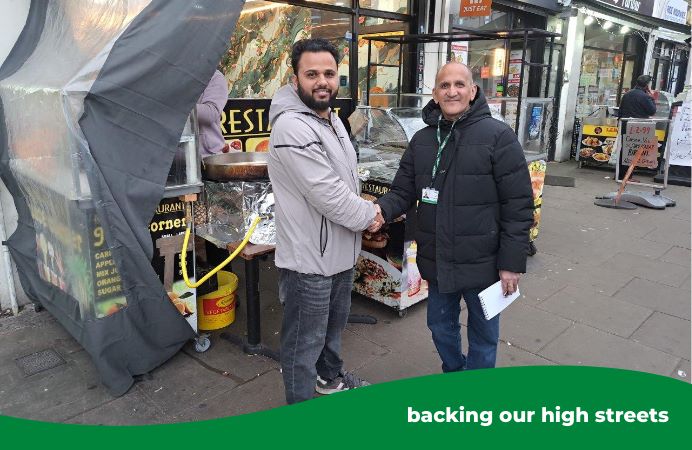
The council’s commercial waste and enforcement teams joined forces for a day of action in Southall Green to make sure businesses are doing their bit to keep the borough clean.
They visited 22 businesses along Featherstone Road and The Green earlier this month, areas known to the council for high levels of fly-tipping. On the spot checks were carried out to make sure that businesses are complying with their legal duty of care when disposing of waste.
Under the law, they must have a Waste Transfer Note (WTN), which is a legal contract with a licensed waste company, and the business must keep documentation to prove it. This helps ensure waste is collected and disposed of responsibly, rather than ending up dumped on the street.
What happened on the day?
Of the 22 businesses visited:
- 9 businesses were able to show their trade waste paperwork
- 13 businesses could not provide documentation during the visit, although they confirmed they do have trade waste agreements. They were served with a Section 34 Notice, which gives them 14 days to supply a copy of their agreement
- of those 13 businesses, 9 have since produced the paperwork, and the remaining 4 may be issued a fine of £300
- one of the businesses signed up to the council’s waste management services
Why does this matter?
Businesses have a legal responsibility to dispose of their waste properly. When it is not managed correctly, it can lead to fly-tipping, which spoils the local environment and costs taxpayers’ money to clear up.
Councillor Paul Driscoll, the council’s cabinet member for climate action, said: “We all want clean streets. Businesses must play their part in making sure their waste is collected responsibly by licensed contractors.
“This operation shows we take duty of care seriously and will take action where needed.”
Wider business enforcement
The council is committed to getting tough on counterfeiters, fraudsters, and bad businesses that break the rules and take advantage of shoppers and consumers. Frequent enforcement protects the public, with measures ranging from improvement notices to closures and prosecutions closures.
Highlights this council term include:
- 6,400 food safety inspections and 26 food safety prosecutions, resulting in close to £500,000 in fines and legal costs
- food safety compliance rates rose from 82% to 88% over the period, reflecting the effectiveness of targeted interventions, education, and enforcement
- seizures of more than 130,000 illicit cigarettes, 75 kg of contraband shisha, and more than 25,000 illegal vapes
What’s next?
The council will carry out similar operations in other fly-tipping hotspot areas across the borough to make sure businesses are following the rules.