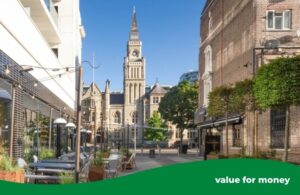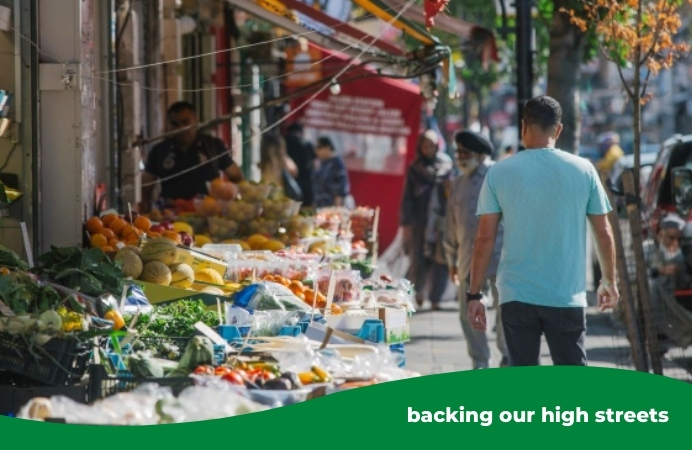

High streets are often the heartbeat of our local economy and are central to our 7 towns’ identities.
So, it is natural that Ealing Council has been working hard to help them to thrive – from investment in jobs, to revamping parades; and from supporting new businesses, to cracking down on those giving others a bad name.
Councillor Kamaljit Nagpal, the council’s cabinet member for decent living incomes, said: “Our high streets play a vital role in our communities. That is why it is so important for the council to do everything it can to support them and keep them clean. We have invested heavily in our town centres and our high streets, bringing more opportunities for shopping and fun. I am proud of what we have achieved so far, and I look forward to seeing our high streets continue to grow and flourish.”
Investment in high streets
More than £1million has been invested by the council in improving our local high streets and parades since 2022. This funding has been spent on initiatives aimed at making shopping areas more welcoming and attractive, as well as encouraging community events and helping to attract more visitors.
Earlier this year, the council secured funding through the Mayor of London’s High Street Place Labs programme. With this £50,000 funding, the council is working closely with partners and local people to enhance West Ealing’s high street. The project will bring vacant retail spaces back into use, supporting good jobs, increasing community connections, and reducing anti-social behaviour.
Transport-related projects such as Visions for Northolt have also seen considerable investment in cycleways, pavements, and roads in town centres.
Support for local businesses
Small businesses, start-ups, and entrepreneurs account for 99% of the borough’s economy but they are facing increasing rents. In response, the council has recently published a new affordable workspace delivery plan. It describes how the council will work with companies and organisations to help create more workspace that start-ups and small businesses can afford in the borough’s 7 towns. Some are already being created in the Old Oak area.
Similarly, the council’s Learn Ealing service has linked up with a number of other organisations to support people into starting up new businesses and taking a new career path. For example, the Startup School course has led to a number of successful graduates getting out into the community to trade their products and services: from a jeweller to a fashion brand, and from a fitness trainer to a food business.
Meanwhile, a new high street sector forum was established in September 2025, bringing together business owners and community groups every 2 months. They have been meeting to discuss how they can all work together to make improvements.
And North Acton could soon have a new ‘business improvement district’ (BID) to help it thrive, after the council and its partners completed a preparatory study. If community groups and businesses back the plan in a ballot, the area will get the borough’s newest BID, following in the footsteps of Ealing Broadway and West Ealing. Each BID works to maintain and improve a shopping area, with the input of local businesses and the council.
In October, Make It Ealing BID secured another 5-year term following a successful ballot of the businesses which fund it.
Economic growth and regeneration
Our high streets employ thousands of people.
As part of supporting the creative industries, the Acton and Park Royal Creative Enterprise Zone has supported dozens of new creative businesses to get started in affordable spaces since it opened in 2022
Meanwhile, the council’s ‘Good for Ealing’ programme is helping attract investors to the borough as a place to do business.
In partnership with the Old Oak and Park Royal Development Corporation and Imperial College London, the council is considering ways to enliven the emerging town centre in North Acton. This follows the opening of new retail units in North Acton Square.
Skills and employment
Since 2022, more than 2,200 apprenticeships have been created, with over £400,000 given to businesses to support training costs.
The London Living Wagehelps residents get fairly pay while enabling employers to retain and attract staff. The number of businesses accredited as London Living Wage employers has doubled since May 2022. There are now 100 accredited employers in the borough, with nearly 1,000 local workers receiving a pay rise. North Acton Square is expected to become the first Living Wage Building in the borough by the end of the year.
Enforcing standards
The council is committed to getting tough on counterfeiters, fraudsters, and bad businesses that break the rules and take advantage of shoppers and consumers. Frequent enforcement protects the public, while also supporting the thousands of businesses that follow the rules and do so much to make our high streets a place people want to visit.
Since 2022, there have been more than 6,000 food safety inspections; and food hygiene prosecutions resulted in close to £500,000 in fines and legal costs. Compliance with regulations has risen during that time. And the council’s trading standards team has seized huge amounts of unsafe or illegal goods, sometimes using sniffer dogs to discover hidden contraband: more than 130,000 illicit cigarettes, 75kg of shisha, 30kg of tobacco, and more than 25,000 illegal vapes. Underage sales of knives, alcohol, and vapes have also been a focus for the council’s enforcement officers, leading to several prosecutions.
Keeping high streets clean
Fly-tipping is a problem that can affect our high streets as much as other, quieter parts of our borough. And the council’s fly-tipping campaign ‘This is our home, not a tip’ has led to identification of people illegally dumping waste in our high streets – with CCTV footage and a ‘name and shame’ web page playing a big role, along with an awareness campaign to help more people understand what fly-tipping is and why it so damaging to our area.
Looking ahead
The council is working on new plans for North Acton and a community-led regeneration charter. These initiatives are intended to support the continued growth and development of high streets and town centres.