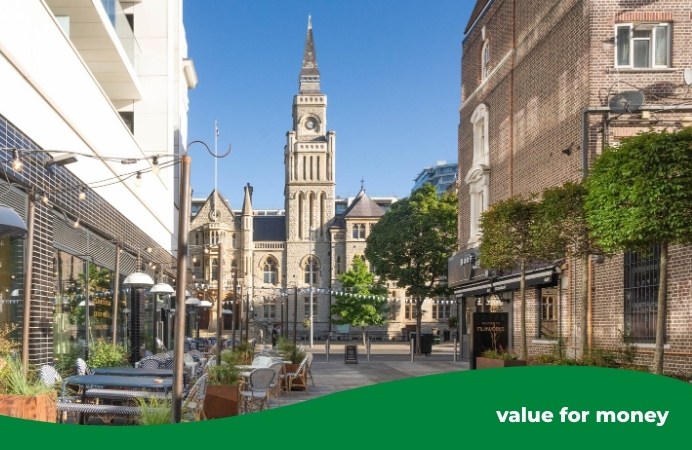

New parks and trees, wildlife returned after hundreds of years, thousands of new homes, high-performing schools and thousands of people helped to live independently at home.
These are just some of the highlights of a document published by Ealing Council recently.
Progress with Unity (named after the council’s motto) reports on how the council has worked to achieve the aims set out in the 4-year Council Plan that covered the period from April 2022 until this month (March 2026).
You can read a summary version or the full version of Progress with Unity on the council’s website.
A Council Plan is published every 4 years to set out what the local authority intends to achieve and what its missions and priorities are.
This is the last of our series of spotlight articles. You can see the whole series at the bottom of this article.
What does the report say?
It is broken down into 9 sections – each representing one of the 9 priorities set out in the 2022 Council Plan. Here are some of the highlights.
1. Tackling crime and antisocial behaviour. The council pledged to invest £13million, including £1.8million to make public spaces safer and well-lit and, since then, has: published a Male Violence Against Women and Girls strategy with the Safer Ealing Partnership; installed 43 new high quality CCTV cameras (bringing the total number of CCTV cameras in the borough to more than 700); upgraded more than 3,100 streetlights to LED; created the Safer Ealing website to provide advice on staying safe and where to get help; expanded visible patrols by extending programmes such as Parkguard; renewed a boroughwide public space protection order (PSPO) to give officers extra powers to deal with antisocial behaviour; and helped the police establish 24 Safer Neighbourhood ward panels to give residents a chance to attend and have a voice in local policing.
2. Climate action. So far, 620,000 square metres of land has been rewilded, with another 220,000 square metres set to follow this year at Warren Farm, which the council has recently had designated as a local nature reserve. It is part of a wider effort to increase and protect green spaces for us all to relax and exercise in and enjoy; and to safeguard wildlife for future generations as well as cleaner air to breathe. As part of this, 9 of the 10 new parks or open spaces pledged in 2022 are open (including Pear Tree Park in Perivale and Glade Lane in Southall), and the 10th is not far away. Working with community organisations like Ealing Wildlife Group and others, in 2023 beavers, a keystone species, were reintroduced to Greenford after a 400-year absence and harvest mice were released in several locations. The council’s vision for creating a transformative regional park of connected green spaces that would stretch across our borough developed (in fact, it got a step closer just this month when a partnership with neighbouring Hounslow Council, the National Trust and others was announced). Meanwhile, recycling rates have remained among the highest in the capital and the council opened the Stirling Road Circular Economy Hub in Acton to help people reuse and recycle things and also the Library of Things in central Ealing to offer the option of borrowing a whole range of handy household items and tools. Active travel was the focus of a new charter, and multiple new cycle lanes have been created, 150 bike hangars installed, and 50 ‘school streets’ have opened to make cycling, walking and scooting on the school run easier and safer.
3. Healthy, equal lives. The council has helped more than 3,000 people each year to continue living independent lives within their own homes – and more than 3,700 this past year, which is higher than the target it set. It has been achieved through a number of council-led services, including: a direct payments scheme, which gives people the freedom to choose the care that works best for them; its reablement service, which supports recovery after illness or injury; home adaptations through its Better Care Fund. Meanwhile, the council’s falls prevention programme has been helping residents stay safe and confident at home, reducing hospital admissions. And council social workers are working closely with staff on hospital wards, which has seen the borough create the fastest hospital discharge rates in north west London. More than 2,500 care workers in the borough are now paid the London Living Wage. In addition, the council’s Community Champions programme has seen more than 120 local people with good networks help to spread important information about health services. An independent Ealing Citizens’ Tribunal was set up to investigate inequalities and more than 20 parent forums were created too, to help tackle the gaps in the educational attainment of local black school pupils.
4. A fairer start. Local children get some of the best education in London, with 98% of the borough’s maintained schools rated Good or Outstanding by Ofsted. That quality shows up in results, too, which are above national averages. The council has been investing to allow more children with special educational needs and disabilities (SEND) to learn locally with the specialist classrooms and support they need (with more than 200 new SEND pupil places also created since 2022). Nearly 80% of local schools now have full wrap-around care, provided from 8am to 6pm. And, over the school breaks, the council’s Holiday Activities and Food programme has been providing free, enriching clubs during school holidays for around 4,000 children on benefits-related free school meals. After a £2million refurbishment shaped by the views of young people, the Southall Young Adult Centre (YAC) reopened in 2025 and has seen a rise in attendance. It now offers a multi-use games area, indoor sports court, gym, gaming zone and kitchen. Since 2022, the council has invested around £2million in other youth services, such as mentoring and outreach programmes in schools. The council has also achieved 96% of the pledges made to care leavers in spring 2023, when it became one of the first local authorities in the country to make being a care leaver a protected characteristic at the council – meaning you cannot discriminate against someone because they are a care leaver.
5. Decent living incomes. By the end of March, local employers are expected to have offered almost 11,000 new job opportunities across the borough in just 4 years – exceeding the council’s original target of 10,000. The council and its partners have also helped set up more than 2,200 apprenticeships for local people – beating the target of 2,000. In fact, 2,500 are expected to be in placements by the end of March. More than 7,000 residents who have faced the toughest barriers to employment (such as 100 young people with SEND) have also been supported into work. Meanwhile, by the end of March, more than 12,000 qualifications and training programmes are expected to have been completed in the borough since 2022, with the council’s help. And, by the end of April, 7 new learning zones (‘one stop-shops’ for training, skills and classes) will have also opened since 2022, with one in each of the borough’s towns. Meanwhile, Learn Ealing, the council’s adult learning service, has been rated ‘good’ by Ofsted, with 2 areas of their work marked as ‘outstanding’. That makes it the best performing service of its kind in west London.
6. Inclusive economy. The council is now providing one of the most generous council tax support schemes in London – to support eligible residents who need it to make ends meet. And, in fact, residents now pay less in real terms than in 2010, when accounting for inflation. The council set up special pages on its website to show what other support is available from the council too, for those facing financial hardship. The council’s website also now has an easier-to use ‘My Account’ platform, better digital forms, a new web assistant ‘chatbot’ and access to ‘webchats’ with customer service staff. It has also added translations across all of the borough’s most commonly spoken languages, and British Sign Language support. To help those who are not easily able to afford to get online, hundreds of laptops and tablets have been donated to schools and charities in the borough – and unemployment among those who received a device fell from 69% to 26%. Age UK Ealing’s digital inclusion service, meanwhile, which is based at the council’s Greenford Community Centre, also runs courses to help older learners feel safe and confident using technology. Meanwhile, thousands of residents have felt the benefits of the council’s 7 community hubs, which have been set up since 2022, in the borough’s libraries. The offer help with things like completing an online council application, getting advice on council matters or setting up an online My Account with the council.
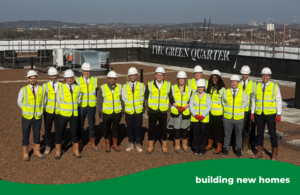
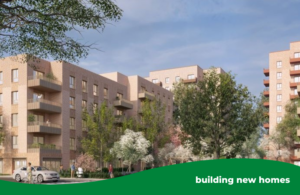
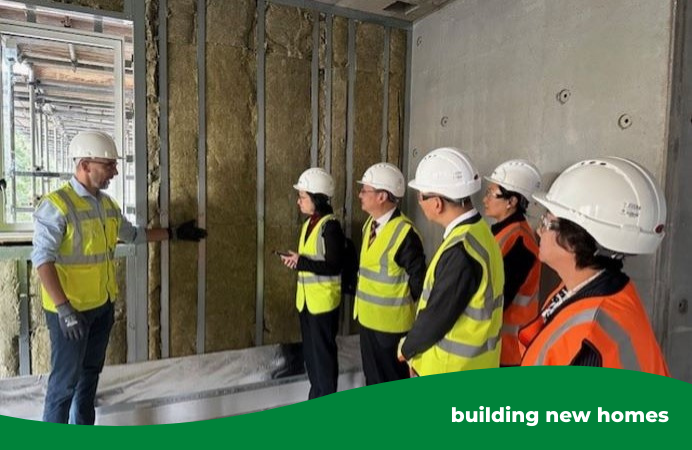
7. Safe and genuinely affordable homes. As part of one of the biggest council homebuilding programmes in the country, thousands of new homes have been built, at regeneration sites across the borough, including Acton Gardens, Copley and High Lane in Hanwell, Northolt Grange, and Golf Links in Greenford. However, there are still currently more than 7,000 households on the council’s housing waiting list and that is why the council has invested £21.2million in creating 100 new, safe, self- contained places for people who need temporary accommodation. Meanwhile, 93% of council homes now meet the Decent Homes Standard, with a £425million programme under way to bring this all the way up to 100% by 2028. Repairs and maintenance services have been improved, too, with recognition from the national Regulator of Social Housing. And, over the last 4 years, more than 1,200 council homes have been transformed into warmer, more energy-efficient places to live. These improvements not only bring environmental benefits but also help residents save on energy bills. To raise standards for privately rented homes, the council has strengthened its licensing schemes – or, in other words, laid down stricter rules around safety and management. Of course, homelessness still exists in the borough and the council is working with partners to provide support. Indeed, the number of rough sleepers has fallen. And, since 2022, 470 people have been supported to get off the streets into emergency accommodation.
8. Good growth and new homes. By the end of March 2026, almost 2,700 new genuinely affordable homes are expected to have been built, or started, in the borough since 2022. This has included homes built by the council at its estates around the borough. They will all be let to families on low incomes by the council or a housing association. Overall, more than 35% of all homes built in the borough in the last 4 years have been ‘affordable’, according to national guidelines. Recently, the council has also bought 290 new homes from developers that were still under construction in Acton and Southall and previously due to be sold on the open market. These homes will provide genuinely affordable places to live for families on the housing waiting list. In 2024, the council was ranked within the top 12 planning authorities in the country and given a ‘platinum’ rating. And landlords now also face tougher rules if they want to convert family homes into rented rooms, after the council tightened planning controls. Extra planning oversight will also preserve a series of local neighbourhoods for generations to come, after a borough-wide review of conservation areas. On a larger scale, a new Local Plan, which will shape growth and development in the borough for the next 15 years, is soon to be in place after several years of work and consultation, working with residents and community groups.
9. Thriving communities. A new Community Charter was adopted by the council in 2025 with the aim of making sure residents and community groups always feel able to get involved in council decision making processes. Town teams were also created in each of the borough’s 7 towns with members including residents, business owners and faith leaders. They have been deciding how to spend money to make local improvements, based on ideas submitted by local people. It is part of the council’s Your Voice, Your Town that involved ongoing consultation with residents in each town across 2024 and 2025. Cultural events, and activities, play a huge role in the sense of belonging to a community. In 2024, the council published its cultural manifesto to build on the legacy of the borough’s long, and rich, cultural history by creating more places for residents to enjoy arts and culture and new jobs to help the creative sector thrive. The Ealing Culture website was set up in the same year to support local events and let people know what exciting music, arts and culture were happening around the borough. And, in 2025, a creatives directory was added to give a platform to more than 100 local artists, musicians and designers. The council also became the first London council to have a venues directory to help people find events. DJ and Bhangra workshops, steel pans and poetry performances were held in 2025 to celebrate the reopening of Acton, Northolt and Southall Dominion Centre libraries after an almost £1million makeover. As well as new study areas, they now have space to host events, performances and meetings. New stages and furniture at the upgraded libraries were created by local creative businesses in the council-backed Creative Enterprise Zone (CEZ) in Park Royal. Since opening in 2022, the CEZ has become home to more than 345 businesses in and enabled 1,250 new jobs, by offering affordable spaces to help these companies. Meanwhile, the borough’s many parks and green spaces, including those opened over recent years (see the ‘climate action’ section above), will provide multiple sports opportunities – not least at a site next to Warren Farm, where there are plans to build entirely new sports pitches and more. With the Lawn Tennis Association’s support, 14 park tennis courts have been refurbished and opened; while new cricket pitches were installed at Pear Tree Park and Rectory Park; and various other projects are under way, such as a 3G football pitch at Ravenor Park. The council has also invested around £2million to improve 22 playgrounds to give children and families safe, modern, and fun outdoor spaces to play.
More reading
Read our whole series of spotlight articles.
- Spotlight: staying independent, staying well – Around Ealing
- Spotlight: good, well-paid jobs – Around Ealing
- Spotlight: backing our high streets – Around Ealing
- Spotlight: cleaner streets – Around Ealing
- Spotlight: celebrating culture, community, and a bright future – Around Ealing
- Spotlight: the next generation – Around Ealing
- Spotlight: better homes for all – Around Ealing
- Spotlight: getting around the borough – Around Ealing
- Spotlight: help with the cost of living – Around Ealing
- Spotlight: good growth for our borough – Around Ealing
- Spotlight: keeping you safe – Around Ealing
- Spotlight: a fairer place for all – Around Ealing
- Spotlight: building a more biodiverse borough – Around Ealing
- Spotlight: parks and sports – Around Ealing
- Spotlight: building the homes the borough needs – Around Ealing