The fight against fly-tippers is stepping up a gear as even more dedicated officers take to the borough’s streets to get tough on people illegally dumping waste.
New patrols by Parkguard, a contracted service that has been working with Ealing Council since 2013, is the latest move to tackle fly-tipping in the borough.
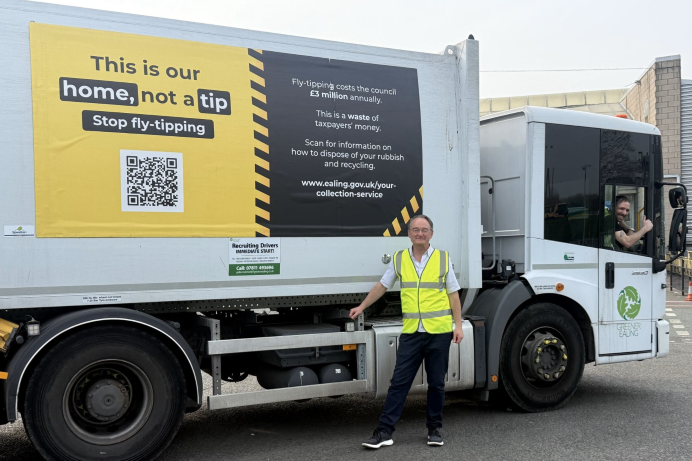
The council’s ‘This is our home, not a tip’ campaign, which began last spring, has already seen the introduction of heftier fines, more penalty notices being issued and additional CCTV cameras being installed.
Its aim is to increase awareness of what fly-tipping is, the impacts it has on both the council and the community, and how working together can stop fly-tipping.
What’s been happening?
Parkguard officers, who are usually patrolling parks and estates or responding to noise complaints, have also been supporting the council’s ongoing efforts to keep the borough free from illegal waste since last month.
You may have already seen them carrying out tasks including:
- patrolling locations based on fly-tip reports
- collecting evidence from fly-tips
- working closely with the council’s CCTV team
- issuing fines to offenders
- visiting businesses to make sure they are legally disposing of their trade waste
So far, they have patrolled more than 40 hotspot locations and visited more than 20 businesses known to the council for breaking waste disposal rules. Of these businesses, 6 have received enforcement action, and others have been issued warnings and reminded of their legal duties.
Dedicated investigation team in hotspot locations
As well as the new patrols, an extra fly-tip investigation team has been working in hotspot locations since October.
This team has already removed more than 70 tonnes of dumped waste and continues its crackdown on the borough’s worst affected areas for fly-tipping.
Catching offenders
To help deter fly-tippers and capture evidence, 8 new CCTV cameras have been installed at prime fly-tipping sites across the borough.
These cameras have recorded more than 160 incidents of fly-tipping and of these, 95 incidents involving vehicles that already had DVLA enforcement notices.
Since fines increased from £400 to £1,000 last May, the council has issued more than 3,000 fines. In the latest figures announced for 2024/25 by DEFRA, Ealing Council is one of the top local authorities in England for issuing fly-tipping fines.
More to come
The council is funding further action to combat fly-tipping. Research has found fly-tipping attracts more litter, so £500,000 has been allocated to create ‘tidy teams’ to remove fly-tipping more quickly.
And, the council has plans to make it easier for residents to dispose of bulky waste with the introduction of a new touring neighbourhood household reuse and recycling service and lower costs for garden and bulky waste collections .
Keep an eye on Around Ealing for the latest updates.
Council leader Peter Mason said: “We promised to take tougher action against fly-tipping, and these new patrols show we mean it. People who dump waste illegally force the whole community to pick up the cost.
“With higher fines, more officers on the ground and better use of CCTV, we are taking firm action to protect our borough and keep our streets clean.”
Councillor Paul Driscoll, the council’s cabinet member for climate action, added: “Fly-tipping harms our environment and pride in our community. These extra teams, along with the ‘This is our home, not a tip’ campaign, are helping us gather evidence, issue fines and clear dumped waste faster.
“We all have a role to play, and by reporting fly-tipping and disposing of waste responsibly, residents can help us keep our borough clean and pleasant.”
Working together
To combat fly-tipping, we all have a role to play. The council is calling on residents to:
• use the council’s rubbish and recycling service from home on the correct collection day
• use Greenford Road Reuse and Recycling Centre, or the council’s bulky waste collection service
• report fly-tipping through the Love Clean Streets app or the council’s website.
Greener Ealing Ltd, the council’s rubbish and recycling contractor, works hard to collect as many fly-tips as possible, as quickly as it can. Currently, 98% of reported fly-tips are collected within 2 working days. But, this is time that could be better spent on keeping your streets clear of litter.
The council also has to spend time and money working hard to identify offenders. It uses evidence found in the dumped waste itself, CCTV footage and videos from witnesses to track down fly-tippers and issue fines.
Alongside the campaign, and fines, the council also works directly with residents – especially with the community group LAGER Can, which organises regular litter picks and reports fly-tips its members come across.