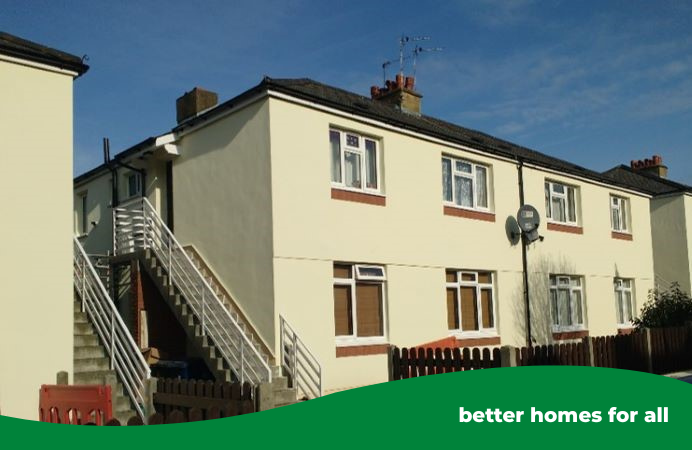

Work is under way to improve the energy performance of hundreds of Ealing Council’s homes, by doing a ‘retrofit’ on them to make them warmer and cheaper for families to run.
The huge project will see 732 council homes retrofitted with a package of improvements by 2028. As well as improving quality life for the families who live in the homes, it will help to cut harmful carbon emissions across the borough.
What work is planned
Each home included in the retrofit programme will receive a different package of improvements. They could include:
- external wall insulation, to keep heat in
- loft insulation
- new, energy‑efficient windows and doors with trickle vents
- underfloor insulation, where suitable
- more efficient boilers and heating upgrades, where needed
- whole‑house ventilation to deal with damp and mould
- home environment sensors to help residents use heating wisely, and to warn of any issues early
- new or upgraded roofs where needed
Residents have already taken part in workshops to shape choices and design details, including the options for windows and doors.
Saving the environment, not just your pocket
The retrofit work will prepare homes for future low‑carbon technologies, such as solar panels and heat pumps, while improving energy ratings.
By improving the energy efficiency of its homes, the council expects to save an estimated 524 tons of carbon dioxide and 230,000 kilowatt-hours per month through the current programme. This supports the borough’s wider climate goals and complements advice and support available to local people through services such as Healthy Homes Ealing.
The retrofit work is being part-funded by the government’s Warm Homes: Social Housing Fund, with almost £6.5million awarded to the council through the London Councils partnership. The council has also allocated more than £35.5million over 3 years to support the programme.
Who will benefit
If your home is included, the council or its delivery partners will contact you to book surveys and agree a schedule.
Last year, the council carried out a survey of its housing, to help decide which homes would be included in the retrofitting programme. It targets older homes with lower energy performance certificate (EPC) ratings. By improving insulation and ventilation, homes should stay warmer in winter and cooler in summer, helping to cut energy use and bills.
Work is already under way, with hundreds of assessments completed, and there will be a steady increase in the number of homes being improved each week throughout 2026.
Most homes will see work completed in around 5 weeks, with resident liaison officers on hand throughout.
Easy‑to‑read guides explain what to expect during works, how to give feedback, and how to get the most from new systems.
Investing in local homes
These are not the first homes in the borough that the council has helped to make more energy efficient. Since May 2022, 1,207 local homes have already been upgraded. Improvements have included better insulation, ventilation, and modern heating systems.
Having set itself ambitious targets since 2022, the council and its partners are on track to have achieved or exceeded them by the end of April next year, with:
- £425m invested in upgrading council homes over the next 5 years
- stronger protections for private renters, including expanded private sector renting licensing and a change in planning rules to curb overcrowded HMO conversions
- significant delivery of new genuinely affordable homes, with the borough ranked second in London for starting and completing affordable housing and a further 290 homes bought
- improved support for people who are homeless or at risk of it, including 100 new high‑quality temporary accommodation units and 315 people helped away from rough sleeping
‘Feel the difference in every room’
Councillor Louise Brett, the council’s cabinet member for safe and genuinely affordable homes, said: “These improvements will cut energy bills for residents across our 7 towns and make their homes both warmer and well equipped for the future. They will help to cut damp and mould, improve ventilation, and make day‑to‑day living more comfortable. By putting better insulation, new windows and doors, and smarter heating in place, families will see real savings, and feel the difference in every room.”